A Deep Dive into Canada’s Hidden Gem
Yoho National Park invites a sense of wonder like nowhere else—its name, “Yoho,” is a Cree exclamation of awe. Nestled in southeastern British Columbia, this compact gem packs glacier-carved valleys, emerald lakes, roaring waterfalls, and towering peaks larger than Broadway musicals. As Canada’s second national park, Yoho blends geological marvels, fossil history, and wild ecosystems, all threaded through Indigenous heritage and engineering feats like the Spiral Tunnels. Whether you’re craving solitude beneath alpine glaciers or postcard views beside turquoise waters, Yoho delivers on every level.
🌍Where Is Yoho National Park?
Yoho sits on the western slope of the Continental Divide in southeastern British Columbia, bordered by Banff National Park to the east and Kootenay National Park to the south. Its 1,313 km² (about 507 mi²) are bisected by the Trans‑Canada Highway, with Field, BC serving as the main visitor hub and gateway town
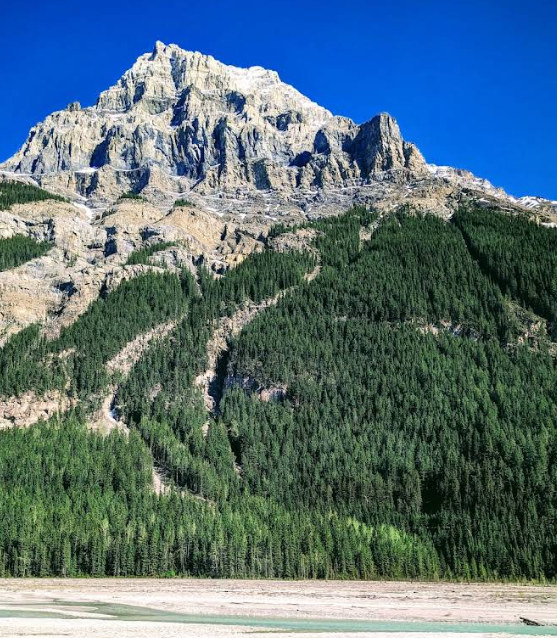
A true mountain playground, Yoho features dramatic elevation changes—from glacier-fed wetlands at valley bottoms, to the rugged summit of Mount Goodsir. Its compact size makes it ideal for multi-day rafts of waterfalls, lakes, and alpine meadows—all within easy day-trip distance of Field. And yes, “Yoho” isn’t just a name—it’s exactly how you feel when you arrive Andrea Ference.

🏛️ 3. A Brief History of Yoho National Park
Established on October 10, 1886, Yoho was named alongside Glacier National Park by Prime Minister John A. Macdonald, following his trip along the newly built Canadian Pacific Railway through the Rockies. Its creation just 28 years after Canada’s first park (Banff) marks it as one of the country’s earliest protected landscapes.
The park’s name, “Yoho,” comes from a Cree expression meaning “awe and wonder,” reflecting early explorers’ reactions to its waterfalls, glaciers, and cliffs. The Ktunaxa and Secwepemc First Nations had long used Kicking Horse Pass for trade, hunting, and travel across the Rockies, and in recent years Parks Canada has worked to recognize and reintegrate Indigenous stewardship and cultural connections to the land.
Apart from its natural beauty, Yoho preserves historic sites such as the Twin Falls Tea House, Abbot Pass refuge, and heritage cabins built by the Canadian Pacific Railway in the early 20th century . In 1984, Yoho joined neighboring parks as part of the UNESCO World Heritage site, highlighting its geological and ecological importance spacesfornature.org.
The park is also famous for housing the Burgess Shale fossil beds, discovered in 1909—offering an extraordinary window into life over 500 million years ago, preserved with rare soft tissue detail. These remain accessible via guided tours from Field
🏔️ 4. Spectacular Sights in Yoho
Yoho may be small in size, but it’s big on scenery:
- Takakkaw Falls: Towering at nearly 373 m, it’s Canada’s second tallest. “Takakkaw” means “magnificent” in Cree, and its spray-fed crescent drop is powered by meltwater from the Daly Glacier Wikipedia.
- Wapta Falls: A broad, 30 m high, 107 m wide cascade on the Kicking Horse River. Easily accessed via a short trail, it’s perfect for wide-angle photography and summer swims Tourism Golden.
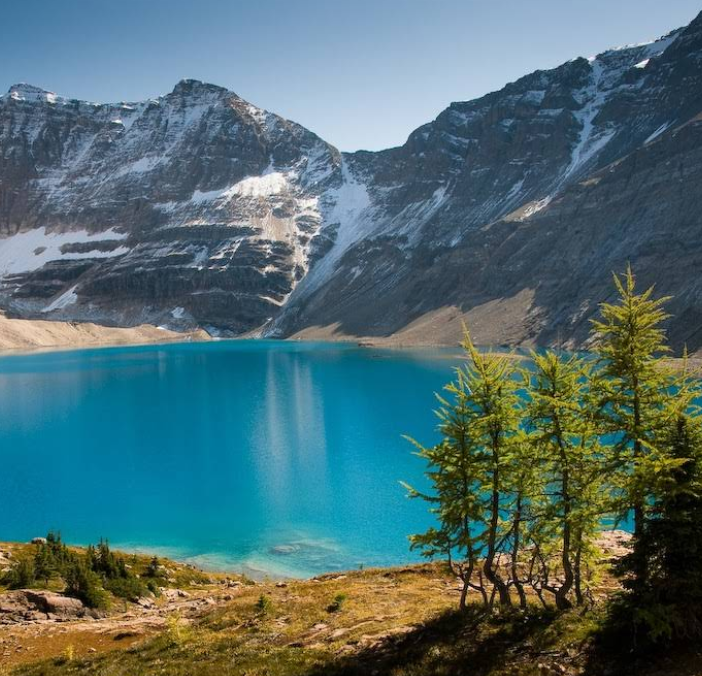
- Emerald Lake: Known for its vivid turquoise color caused by glacial silt, surrounded by High Range peaks. Discovered in 1882 by Tom Wilson, its shoreline supports wildflowers, paddleboarding, and calm reflection.
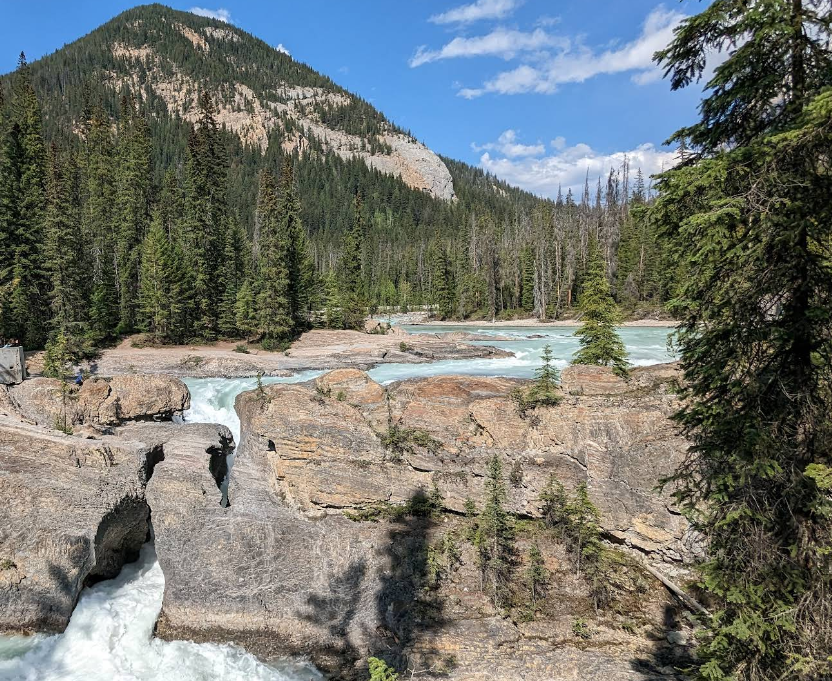
- Natural Bridge: A carved channel of the Kicking Horse River that carves through marble—an unusual geological feature, best viewed in spring runoff.
- Spiral Tunnels: Ingenious engineering built by Canadian Pacific Railway to ease train ascents over the pass, they remain a marvel and draw for train lovers.
- Angel’s Staircase Falls: A cascading 305 m waterfall cascading unseen down a tributary of the Yoho River, visible from a viewpoint along Yoho Valley Trail.
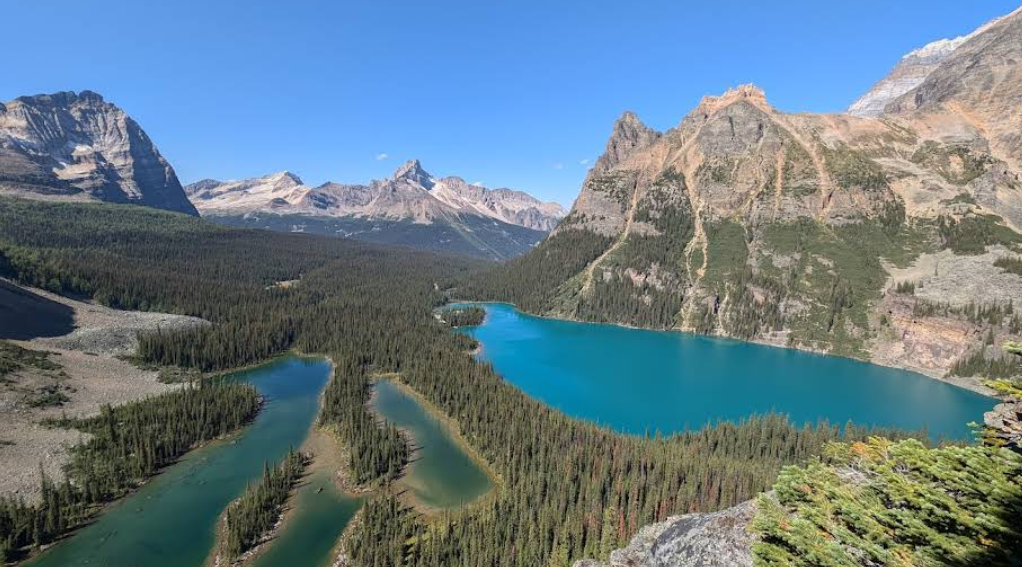
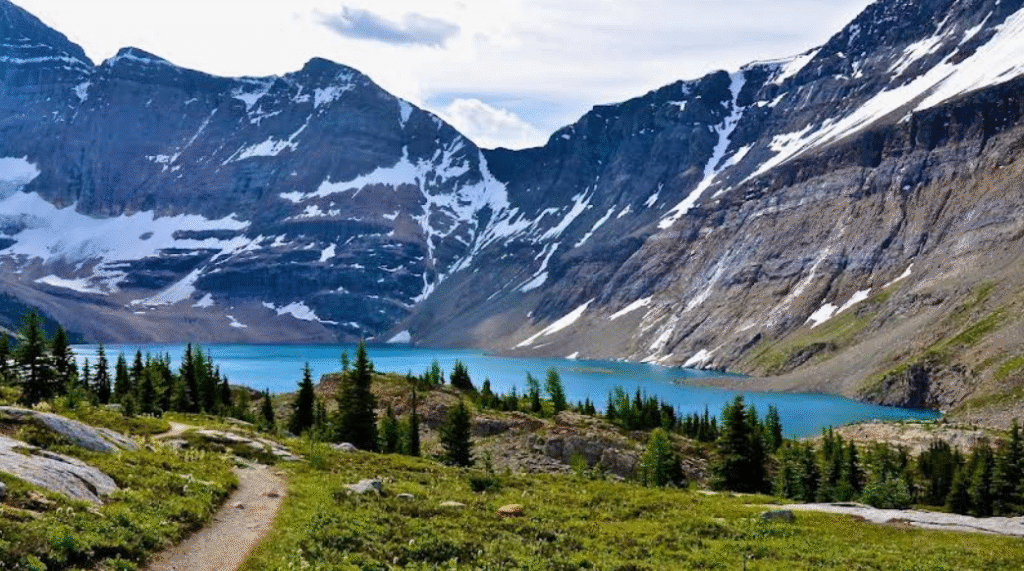
- Lake O’Hara & Lake Oesa: Pristine alpine lakes at ~2,000 m elevation accessed via a bus or 11 km hike. Trails lead to Lake Oesa and the loop at Opabin Meadow, offering views of jagged peaks and glacier-fed lakes.
- Burgess Shale: While not scenic in a traditional sense, the fossil beds represent one of Earth’s most important paleontological sites, revealing detailed Cambrian-era biodiversity ›


🥾 5. Top Hiking Trails
Some of the best hikes in Yoho include:
- Emerald Lake Loop (~5.2 km): Flat and well-maintained, loops around the turquoise lake. Accessible to strollers and wheelchairs in places, with canoe rentals available.
- Wapta Falls Trail (~4.6 km RT): Gently uphill through wetland and forest, ending at a viewpoint of the broad waterfall. Great photo and picnic spot.
- Iceline Trail (~20 km loop): Challenging hike against the Waputik Icefield, with sweeping views of glaciers and alpine meadows.
- Lake O’Hara Circuit: Includes Opabin Plateau, Lake Oesa, and Yukness Ledges. Permit required, limited daily access to protect fragile terrain.
- Rockwall Trail & Hidden Lake: Multi-day backpacking through limestone cliffs, hanging glaciers, and wildflower meadows.
- Yoho Valley Trail to Takakkaw Falls (~4 km RT): Scenic path along the valley to the base of the waterfall, often accompanied by wildflower-filled fields.
- Twin Falls Tea House Trail: Accesses historic cabins above Takakkaw Falls for alpine tea and unforgettable views.
All trails range from easy family-friendly loops to full-day excursions—always check trail conditions and wildlife bulletins before heading out.
🐾 6. Wildlife & Ecosystems
Yoho protects an incredible array of ecosystems—from valley wetlands to alpine ridgelines, supporting 224 bird species and 58 mammal species in total Parks Canada.
Common sightings:
- Roosevelt & Moose: Often seen near rivers and meadows.
- Black & Grizzly Bears: Present in remote areas; campers must store food properly and maintain distance.
- Mountain Goats & Hoary Marmots: Seen climbing cliffs around Lake O’Hara.
- Pika, Lynx, Wolverine, Cougars, Elk, Mule Deer: Adapted to various altitudes and forest types
The park also has four native fish species, including bull trout and cutthroat trout, benefiting from the cold glacier-fed rivers. Over 600 species of plants thrive in forest zones—including rare orchids, whitebark pine, and western hemlock in the Emerald Basin area.
Visitor safety advice: maintain 30 m from elk, 100 m from bears, securely store food and waste, and adhere to posted closures—especially around Lake O’Hara during bear season Parks Canada.
🧘♂️ 7. Local Legend: The Kicking Horse Spirit
Inspired by the legend of James Hector’s horse kick at Kicking Horse Pass—an event which gave both the pass and river their name—local folklore speaks of the Kicking Horse Spirit. Said to appear to travelers who are lost, confused, or emotionally at crossroads, this spirit is depicted as a shimmering horse—or sometimes a faint echo of hoofbeats in the mist.
Witnesses describe sudden clarity or inner peace after hearing the rhythm of hooves when hiking alone near the pass. Indigenous storytellers, particularly among the Secwepemc and Ktunaxa, speak of the pass as a boundary of spiritual transition—between east and west, past and present. The spirit is interpreted as a guardian guiding travelers across that divide.
Some trails near Twin Falls Tea House or Gold Creek Meadow are rumored hotspots. Visitors report being awed by unexpected echos in the valley, or finding carved horse motifs on tree bark or rock faces—whether left intentionally or by coincidence.
Though not officially recognized by Parks Canada, the legend is widely shared among Field locals and long-time hikers—as a poetic metaphor for reflection and transformation.
Whether you interpret it as spiritual or symbolic, the story calls us to slow down and listen—to altitude, to history, to the forest breathing around us. In Yoho, even a legend can feel alive beneath the mountain skies.
🧳 8. When to Visit & Practical Tips
Yoho is open year-round. Here’s how to make the most of your visit:
Spring (May–June): Lush wildflowers, lower crowds—but roads may still have snow at higher altitudes. Summer (July–September): best hiking weather, full access to trails and campgrounds. Fall (October–November): crisp air, golden foliage, fewer visitors. Winter (Dec–Mar): snowshoeing, frozen waterfalls, quiet solitude.
Visitor Center: Located in Field, BC, offering maps, permits, and the most up-to-date trail info
Lodging: Campgrounds like Monarch, Kicking Horse, & Lake O’Hara (reservations needed). Lodges include Emerald Lake Lodge, Elizabeth Parker Hut, and Field B&Bs.
Packing: Layered clothing, rain gear, hiking boots, bear spray, wildlife-safe food containers, and offline maps.
Permits: Required for Lake O’Hara area and guided Burgess Shale tours. Access limited to protect fragile ecosystems.
Transportation: Calgary to Field ~2.5 hrs; Banff ~1 hr via Trans‑Canada Highway. Field offers gas, food, and visitor services.
🏕️ Gear Department
If you’re planning your next adventure—whether it’s a weekend hike, a camping trip, or a cross-country road trip—having the right gear makes all the difference. From quality apparel to reliable equipment, we’ve rounded up the best outdoor products we trust and use ourselves. Check out our top picks below to gear up with confidence.
🏨Need a Place to Stay Booking.com
Need a cozy cabin in the mountains, a beachfront hotel, or just a last-minute stop for the night? We use and recommend Booking.com for finding great places to stay around the world. It’s fast, easy, and often has the best deals—plus, booking through our link helps support this blog at no extra cost to you.
🌱 9. Why Yoho Matters
Yoho’s significance extends far beyond awe-inspiring scenery:
Geological heritage: The Burgess Shale helps scientists understand early marine ecosystems, containing soft-body fossils from over 500 million years ago — a record few places on Earth offer Andrea Ference Fresh Tracks Canada.
Biodiversity hotspot: Despite its small size, Yoho protects multiple ecosystems (alpine, forest, wetlands) and supports rare species like wolverine, mountain goat, grizzly, and endangered plants.
Cultural importance: Home to generations of Secwépemc and Ktunaxa peoples, who carved seasonally-traveled routes over the mountains, and whose knowledge is increasingly honored in park stewardship and education programs Parks Canada Parks Canada.
Conservation model: As part of the UNESCO Canadian Rocky Mountain Parks World Heritage site (since 1984), Yoho connects with Banff, Jasper, Kootenay, and provincial parks to preserve large-scale ecological corridors and wildlife routes.
Climate resilience: Glacier-fed lakes and rivers support clean water and species resilience amidst changing temperatures. Protecting glaciers and snowpack is vital for downstream ecosystems.
Educational value: From school field trips to geology conferences, Yoho is a natural classroom for climate science, paleontology, and conservation biology.
Spiritual sanctuary: The park’s silent valleys, reflective lakes, and echoing waterfalls offer emotional renewal. Visitors often describe personal clarity, heartfelt storytelling, and enduring memory.
Symbol of commitment: Yoho stands as proof that natural wonders matter—that landscapes shouldn’t just exist for Instagram, but for human connection, scientific understanding, and generational legacy.
If Yoho could speak, it would remind us: Protect the wild now, for ourselves and those who follow.
Yoho National Park is not just a place—it’s a journey through time, geology, and the soul. A compact mosaic of glaciers, waterfalls, fossils, and mountain vistas, all carved within the shadow of the Continental Divide.
From the spray of Takakkaw Falls to the quiet shores of Emerald Lake, every corner pulses with life and history. Here, the ghosts of ancient oceans, indigenous guides, and weary travelers echo in the winds. The legend of the Kicking Horse Spirit reminds us that sometimes the mountains speak—and we must listen.
Whether you’re trekking along alpine ridges or tracing the Burgess Shale, Yoho teaches that nature’s intricacy is worth guarding. Its ecosystems, spiritual ties, and geological record are a priceless inheritance.
Every step here asks for respect—with wildlife viewed at safe distance, fragile alpine soils left untouched, and silence honored like sacred space. By traveling thoughtfully, you join in protecting one of Earth’s most extraordinary wild places.
So pack your boots and bear spray, bring your sense of wonder—and most of all, let Yoho humble you. For in its grandeur, you might just find who you are.
Pack smart, travel responsibly, and leave no trace behind. Support Indigenous stewardship, protect what you love, and share this guide to inspire others. 🌿
📥 Subscribe to get new national park guides, gear reviews, and outdoor survival tips straight to your inbox!
📌 Pin this post to keep it handy when planning your next wild adventure at Yoho.
🌐 Helpful Resources for Exploring & Staying Informed
Whether you’re planning your next outdoor adventure or just want to learn more about the parks, fire conditions, or local experiences, the following trusted sources offer maps, guides, facts, and real-time updates:
Now, go explore, wander wide, and breathe deep.
And remember — the North always calls back its own.
Stay adventurous, stay wild, and never underestimate the power of Nature. 🌲